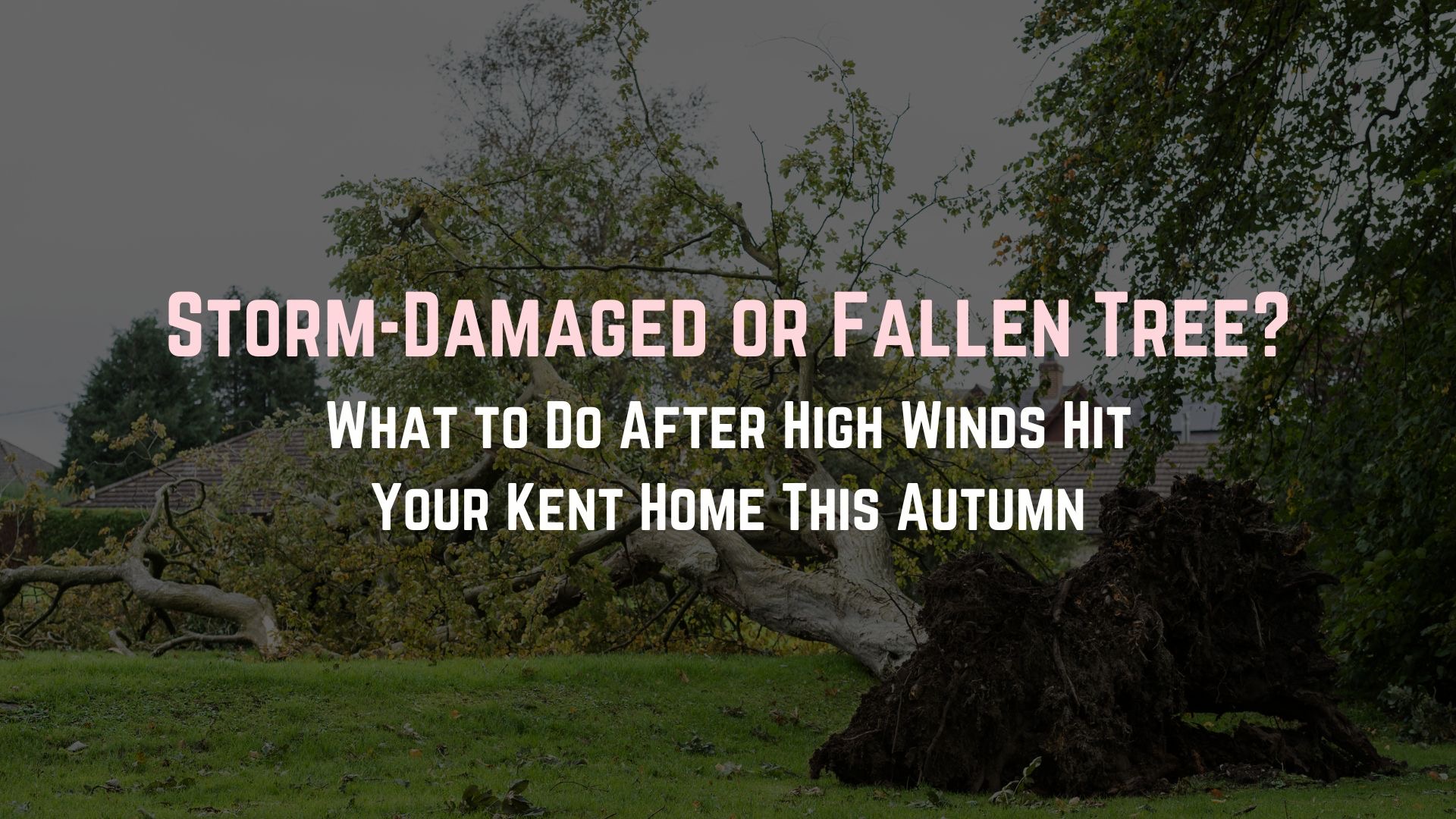
Strong winds and storms can quickly turn a healthy-looking tree into a potential problem.
Sometimes the damage is obvious: a tree has fallen, a large branch has come down or part of the canopy has broken away. In other cases, the signs can be much less noticeable, with cracks, hanging branches or movement around the roots only becoming apparent after the weather has settled.
If you think you have a storm-damaged tree, the most important thing is not to rush into dealing with it yourself.
Check the area from a safe distance
Once the worst of the weather has passed, take a look at the tree without standing directly underneath it.
Look for broken or hanging branches, splits in the trunk, a noticeable change in the angle of the tree or movement around the base and roots. You may also notice branches resting against buildings, fences or other trees.
Storm-damaged trees can be unpredictable. Branches that appear secure may have been weakened, while a partially uprooted tree can still move or fall.
If you have any concerns about its stability, keep people, pets and vehicles away from the area until the tree can be properly assessed.
Does a storm-damaged tree always need to be removed?
No. Storm damage doesn’t automatically mean that the whole tree needs to come down.
Depending on the species, age and condition of the tree, it may be possible to remove damaged branches and retain the remaining tree. In other cases, the extent of the damage may mean that tree removal is the safest option.
This is where a professional assessment becomes important.
A tree surgeon can look at the overall structure of the tree, the extent of the damage and whether there are defects that could affect its future stability. The aim should always be to recommend appropriate work rather than remove a tree unnecessarily.
What if a tree or large branch has already fallen?
A fallen tree can present a very different challenge to routine tree work.
Even when the tree is on the ground, branches and sections of timber can remain under considerable tension. Cutting into them without understanding how the weight is distributed can cause branches or sections of the tree to move suddenly.
The situation becomes even more complicated if the tree has fallen onto a building, vehicle, road, neighbouring property or another tree.
For substantial fallen tree removal, it’s generally best to leave the work to experienced tree surgeons with the equipment required to dismantle and remove the tree safely.
What are the signs of a potentially dangerous tree?
Not every problem becomes obvious immediately after a storm.
You might notice a large branch hanging within the canopy, fresh cracks or splits, exposed roots or a tree that appears to be leaning more than it did previously. Dead or damaged branches can also become a greater concern as we move into periods of stronger wind.
That doesn’t necessarily mean the tree is dangerous or needs removing, but these are good reasons to arrange an assessment.
If something about a tree has noticeably changed following high winds, it’s worth getting professional advice rather than waiting for the next storm to find out whether there’s a problem.
Who is responsible for a fallen tree?
Responsibility can depend on where the tree is growing and where it has fallen.
A tree on private property will normally be the responsibility of the landowner, while trees affecting public roads or other public land may need to be reported to the relevant authority.
Things can become more complicated when a privately owned tree falls onto neighbouring land or causes damage to a building or vehicle. In these circumstances, your insurer may also need to be contacted.
If there is an immediate danger to people, buildings, roads or overhead services, keep clear of the area and contact the appropriate emergency service or authority.
Dealing with storm-damaged trees in Kent
Autumn and winter inevitably bring periods of wetter and windier weather across Kent, making it a sensible time to keep an eye on mature trees around homes, businesses and other properties.
At About Trees, we provide professional tree surgery across Kent and can assess trees that have been damaged or affected by strong winds.
Depending on what we find, the appropriate solution might involve removing damaged branches, pruning or reducing part of the canopy, or safely removing a tree where it cannot reasonably be retained.
Our tree surgeons work across Maidstone, Ashford, Canterbury, Herne Bay and the surrounding areas, helping both residential and commercial clients manage their trees safely.
Concerned about a tree after strong winds?
If you’ve noticed a fallen branch, damaged canopy, cracked trunk or a change in the position of a tree following bad weather, don’t put yourself at risk trying to investigate it closely.
About Trees can assess the tree, explain what we’ve found and recommend the appropriate next steps.
Contact About Trees to arrange professional advice or a quotation for storm-damaged or fallen tree work in Kent.