About Trees Ltd – Kent Tree Surgeon

Need a tree surgeon that can follow spec

Need a tree surgeon that can follow spec

Sometimes we all like to think we know best, we are guilty of that. Sometimes we have to accept that someone else knows better. This happened at a job recently. Our client had employed a Consultant Arboriculturalist to survey the estate of trees. We were tasked with carrying out the works on several trees and keeping to spec. Thus the title Need a tree surgeon that can follow spec

NO big deal

Yes, it’s true that following spec handed down by well qualified consultants isn’t a big deal at all. Sometimes, however it does’t make for an easy time. This is when other – no so committed arborists and companies interpret the spec. in their own way. Generally with a view of speeding things up and making them easier.

What was so tricky?

The spec. really reinforced the mantra of need a tree surgeon that can follow spec. This TPO’d tree (indeed the entire estate is TPO’d pretty much) was to: Reduce crown of tree by cutting back from branch tips by 2-2.5m ensuring wounds are no greater than 75mm and a even leaf density is left upon completion (paraphrased). Not a simple as it sounds. This was a lapsed pollard with cavities, dead wood and generally all the stuff that make tree climbing difficult present. There was not an option for a MEWP as access was tight and the ground conditions (tarmac) was questionable.

Rope and harness time then.

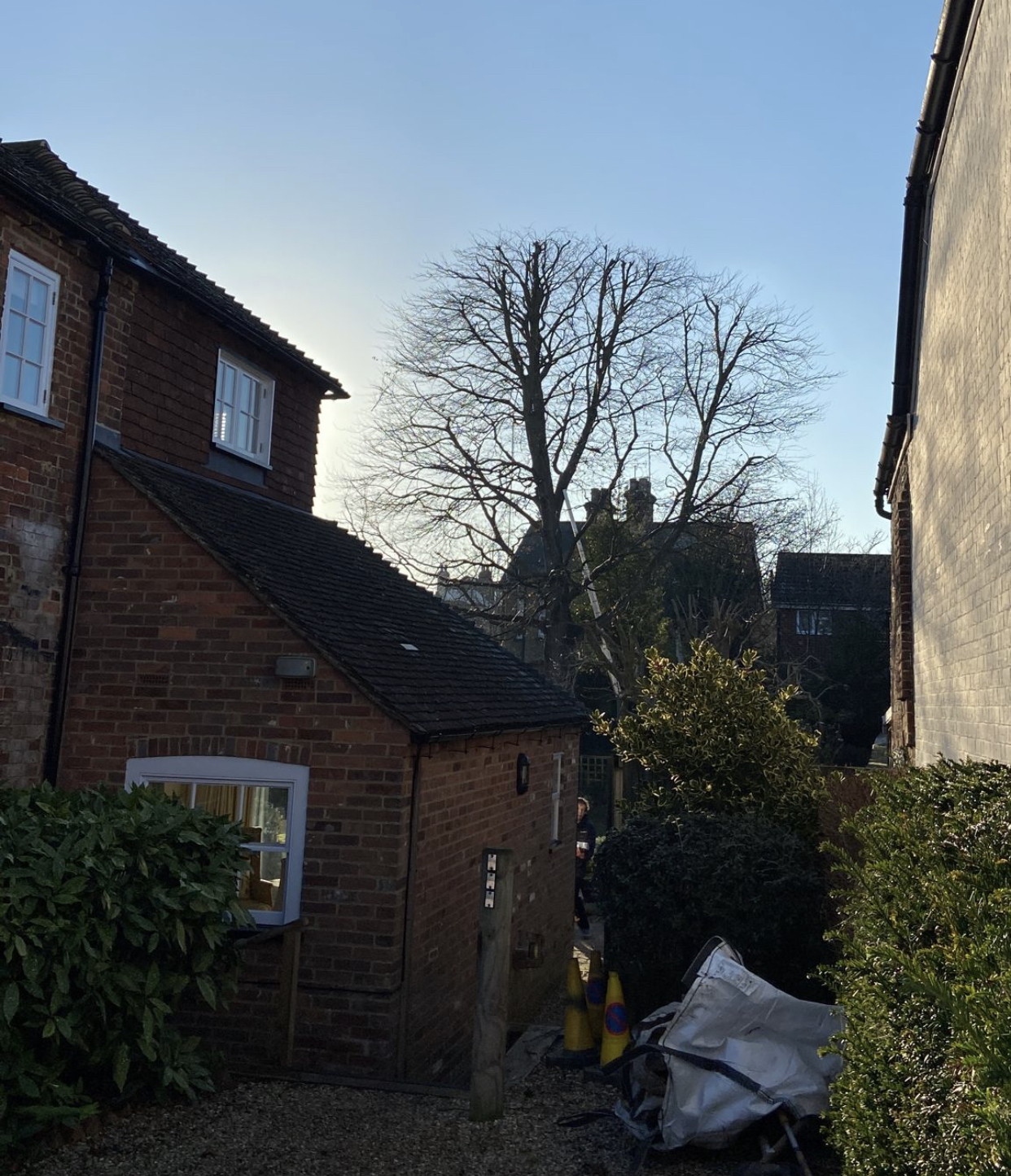
Yes, Arborist Dan climbed the tree using double and single rope technique and managed to ensure that he pruned the tree to spec. to growth points. He insured no cuts were greater than 75mm and that an even density of growth was left upon completion. Out of interest the dense area to the bottom right is another tree behind the one we worked on.

Paternal

I find myself feeling a little bit paternal to the team, I want them to know I have their back, just as I’m exposed letting them be the face of the company, I’m also there for them. I’ve had people before with personal problems at home, difficult family life, tricky ex girlfriends and I’ve tried hard to support and understand. In the past I’ve enjoyed the fact that I’m a Boss and have lads on site to do the hard work. I’ve rocked up in the morning issued the job sheets and left the them to it, truth is whilst trying not to interfere with their way of running the job it just comes across as me not being interested which is far from the truth. My desire to not micro-manage, constantly be calling for progress reports or be Alpha male had been conceived as me just not giving a damn. This is easily changed; I started to go out on site with the team more often. Yes I got under their feet and tried to impart knowledge (that they already know) but at least on those days we are all in it together. I also realised how much of the banter I’d been missing. We also try to have regular tool-box talks. Whilst a bit American and touchy feelythey are really beneficial – team members feel valued and able to raise concerns regarding kit, jobs, timescales etc.

Sub Contractors

Getting subbies in brings a whole new ball game. In truth I feel for sub contractors, these people work HARD! Face it, you’re paying your subbie easily upwards of £160 per day, you’re going want you pound of flesh. I’ve tried to resist this urge, generally they do come in on larger jobs, and so it’s very nature is that these are harder days in fact the whole team works harder on these days. The reason you pay them more? No holiday, no sick, no pension, their PPE, their tools and so on. That’s their risk not yours. It’s not an excuse to load them up. When they are working with us they are part of our team, not some pit pony to be worked and worked and worked. This approach has worked for me, subbies want to come in for me, they’ll change stuff around for us in their diaries and my view is work more conscientiously for us. My experience has shown subbies to be amazing professionals who perform day in day out, learn how different companies work and adjust accordingly, they are worth the money, treat them well. Some may say it’s crazy but when we have subbies in I’m quite happy for the whole team to job and knock.

No expert

I’m really no expert, this is my take on trying to manage people, I’ve never brought in to the school of thought that “there’s plenty more where they came from”mentality this builds no trust or appreciation. Like clients it’s much easier to keep existing employees ones that keep finding new ones. Treat people well, understand that they will clock off and not think about work to the next day, and take them for a pint on a Friday – sorted

Pro Arb magazine article

I quite regularly contribute to an industry magazine. Here is most most recent Pro Arb magazine article about managing people. I’m no expert and have had to learn on the hoof as it were.

Us Arborists are a special bunch, we are in the game because we love it, it becomes a way of life. Seldom do you stumble across forums or Facebook pages where other tradespeople are so sharing with techniques, critical of new kit and indeed other fellow professionals approaches and interpretations of spec than in the world of Arb.I’ve been in the game for over 20 years now and in my view there seems to be a well-trodden labour progression to the industry and the trouble is with Arboriculture is that it isn’t a one-man job. At some point you’ll have to pay someone to work with/for you. This is my take;

All tree surgeons NEED a second person. Those who work alone are taking horrendous personal risks in what is already an incredibly dangerous profession. So that’s what you do, you start off as main climber and get a groundsperson in to help you out, sometimes two. Business goes well and you cannot dedicate that time anymore to swinging around on the latest SRT rigs – people need to be visited, quotes need to be typed up, posted or emailed. You start to rely more on other people to do the job you used to.

Perhaps like me you’ll pick up an injury (let’s face it chances are high, it’s not the softest job on the old bones is it?) and your climbing career will be ended. At 40 I stopped climbing altogether, I’d picked up one too many injuries and if I’m honest was a little exhausted with the sheer intensity of the hard work – yep that’s right I’m a soft Southerner!

Focus

My focus changed; suddenly I become a manger of people and a builder of business. This was never taught to me 23 years ago at Sparsholt. So now like thousands of small businesses, along with payroll, accountancy, purchasing, surveying, secretarial, logistics and face-to-face meetings I became a HR operative too. How hard can that be I thought to myself?I like to think I’m a pretty decent boss, My mantra has been to treat people as I’d like to be treated, I think I’m laid back and realistic in expectations. I lack the drive to build a large company, as long as I’m providing for the family financially and am sound of mind to be a decent husband and father that suits me. I’m not pushy and most definitely not into stress.

I’ve built a small family owned company, we have fulltime staff and subbies come in when needed. I guess a large job could see me have 5-6 people including myself on site. I’m no Richard Branson!

Manager

But I do manage people, and it’s tricky. I think the very nature of the game tends to attract a high proportion of transient type folk. They tend to be young, capable and can work anywhere, why would you not? One of our lads for has ended up living and working in Finland, another buying a beaten up LDV and travelling around the UK and so on. It’s full of opportunity and learning experiences. I know if things were different for me back in the day I’d do exactly the same. It does however have huge implications when a valued team member leaves you.We’ve had it several times over the past 10 years. Whist for me these departures have always been well natured and not personal there’s always been a small part of me that took it so. The upheaval is great and the feeling of being unsettled is unpleasant to say the least.

Bad news

Last year was tricky for us, my Team Leader of 5 years got an amazing opportunity thrust at him, he grasped it with both hands and left the fold, I was shocked and spent the next 4 months bumbling around trying to find a replacement. Why he went and could I have done something to keep him is probably a different discussion, but it was essentially down to the desire to try an area in the industry that we are neither set up for or have interest in doing. I do believe that if someone wants to leave it is not my job to convince them to stay if we cannot satisfy their needs, someone on the firm that does not want to be with you is pretty acidic I think. I took this approach in this case, as I always have done, and I fear I did come across non-plussed about the news. Truth is I was gutted. To my surprise it was really difficult to find a full time team leader, I tried my hardest publicising us as company showing all the decent work we carry out, pointing out what a great guy I am, putting jobs ads up on Facebook of us working with cranes, doing big takedowns, heavy rigging – yawn but still it took time. Fortunately we are back on track now, I now have a capable team, decent lads, who get on well with each other, so normal service seems to have resumed.

Lessons learnt

It also has taught me some really valuable lessons.

What I’ve learnt is that there are plenty of good people out there. What they often aren’t, are people that do it the way you want it done. You have to build on a firm foundation, work ethic is important as it technique, the rest I think is doable. It’s really hard to relinquish that finished article to someone else, there’s no doubt they will do it different and often better than you would have done. This is where I find BS 3998 (2010) useful, if your new subbie/team member can prune to this you can relax a little. You know the knowledge, skill and good practice is there.

No team wants to feel at fault, it’s deeply de-motivating. I think clear concise job sheets can avoid some errors. Sometimes I fear mine are too prescriptive and may come across like I’m patronising the lads or treating them like children- not the case. I do this to protect them on site, mistakes due to misunderstanding of spec. or client’s wishes are down to me. I’d like to think that this makes me part of the team. Don’t get me wrong it’s not a regular occurrence but let’s all be honest mistakes do happen.

Snowflakes

I’ve also found the new cohort of arborists to be conscientious, hard working and really willing to learn. Some of the contractors we’ve used over the past 4-5 months have been well turned out and very professional in both their approach and finished article. There have been no snowflakes walking through our door. But face it, if you were such a person as described in the 1999 film Fight Club

“You are not a beautiful and unique snowflake. You are the same decaying organic matter as everyone, and we are all part of the same compost pile,”

I don’t think you’d be undertaking this career in the first place. So far so good – there is good people out there, that knock out great work that are hardy and not snowflake(like)The tricky part is managing these people, I was never taught HR. I was trained to be an Arborist, of which I do very little now. How to get the best out of people is hard, what motivates them, what do they love. The answer to the latter I have to say is – not your business as much as you do!

This is a harsh realisation but very true, I’m ok with that after all I haven’t loved my ex bosses companies in the past.

Paternal

I find myself feeling a little bit paternal to the team, I want them to know I have their back, just as I’m exposed letting them be the face of the company, I’m also there for them. I’ve had people before with personal problems at home, difficult family life, tricky ex girlfriends and I’ve tried hard to support and understand. In the past I’ve enjoyed the fact that I’m a Boss and have lads on site to do the hard work. I’ve rocked up in the morning issued the job sheets and left the them to it, truth is whilst trying not to interfere with their way of running the job it just comes across as me not being interested which is far from the truth. My desire to not micro-manage, constantly be calling for progress reports or be Alpha male had been conceived as me just not giving a damn. This is easily changed; I started to go out on site with the team more often. Yes I got under their feet and tried to impart knowledge (that they already know) but at least on those days we are all in it together. I also realised how much of the banter I’d been missing. We also try to have regular tool-box talks. Whilst a bit American and touchy feelythey are really beneficial – team members feel valued and able to raise concerns regarding kit, jobs, timescales etc.

Sub Contractors

Getting subbies in brings a whole new ball game. In truth I feel for sub contractors, these people work HARD! Face it, you’re paying your subbie easily upwards of £160 per day, you’re going want you pound of flesh. I’ve tried to resist this urge, generally they do come in on larger jobs, and so it’s very nature is that these are harder days in fact the whole team works harder on these days. The reason you pay them more? No holiday, no sick, no pension, their PPE, their tools and so on. That’s their risk not yours. It’s not an excuse to load them up. When they are working with us they are part of our team, not some pit pony to be worked and worked and worked. This approach has worked for me, subbies want to come in for me, they’ll change stuff around for us in their diaries and my view is work more conscientiously for us. My experience has shown subbies to be amazing professionals who perform day in day out, learn how different companies work and adjust accordingly, they are worth the money, treat them well. Some may say it’s crazy but when we have subbies in I’m quite happy for the whole team to job and knock.

No expert

I’m really no expert, this is my take on trying to manage people, I’ve never brought in to the school of thought that “there’s plenty more where they came from”mentality this builds no trust or appreciation. Like clients it’s much easier to keep existing employees ones that keep finding new ones. Treat people well, understand that they will clock off and not think about work to the next day, and take them for a pint on a Friday – sorted

UK’s 4th Largest Vineyard Signs Up For Tree Care Services

About Trees Ltd is happy to announce that the fourth largest vineyard in the country has signed up to our tree care services.

Eye catching figure that isn’t it? It doesn’t refer to About Trees Ltd being the 4th largest in the country in terms of tree care, although we do think big. It’s to do with our latest job on the estate of the 4th largest in the country in the world of grape growing.

It’s an honour…

…to be asked by a vineyard that is the 4th largest in the country to help them out with their tree management issues.

Like us all grapes enjoy the sun, and also like a lot of us they do not like the wind. Trees are planted as shelter belts to stop the wind from damaging the valuable crop. After time the trees on this site had become too tall and had started to affect the amount of sun hitting the fruit.

Time to fell the trees?

No, it’s time to retain the old Alders but time to manage them also. Alnus spp. are pretty hardy trees and will regenerate from fairly hard pruning. So that’s what we are doing. We are carefully reducing the height and spread of these trees so they can be of benefit to the crops and even the local wildlife.

When these people trust you…

…you know you are doing something right. If you have tree management issues that require our tree care services, then get in touch with About Trees Ltd today.

About Trees Ltd Tree Care Services Kent

Are we really raking it in?

It’s that time of year when all reputable tree companies should be fully booked and working hard – we are now booking into the new year. But are we really raking it in?

It’s true that having Arborists at your property is an expensive undertaking. You’re paying for experience, professionalism and trustworthy people on site.

What you are also playing for is;

Chipper £20k, Stump grinder £10k, Chainsaws x4 £3k, Climbing Kits £2k, associated tools £1k, Ladders £500 not to mention the truck itself 2 or 3 qualified and ticketed men on site, PPE for those men £1k, £10millon insurance, not forgetting trade accreditation’s.

This is pretty much the standard kit on most jobs, there’s no expensive rigging or really specialist equipment included in the above list.

These costs are substantial (there’s always on going repair costs also) and make up a great deal of the daily rate that you may be charged.

You can rest assured that your average tree company is not making the money you think they are.

What’s more crucial is that when you find quotes that are significantly cheaper than others they are cutting corners. Something is not right – maybe no insurance? Maybe not paying their workers a decent wage? Maybe using unsafe tools and machinery? Who knows.

Site clearance in Kent

We tend to stick to the high end domestic and commercial work normally, but just before Christmas we were asked to tender for some site clearance in Kent. If, I’m honest it was not my area of expertise but the job was interesting and I had a bit of a hunger to take it on board. Previously I had made a decent contact on a job that I had priced for Cambridge University for some other site clearance in Kent that they needed doing. I gave my man a call.

All the gear and lots of ideas

It was a good call to make, we tendered for the job and I planned to contract it out to a company with the workforce and machinery to undertake this contract. Guess what? We won the tender, I think we were up against 4 other firms. Clearly my client liked what they saw on the site meeting an subsequent emails and communications.

National Grid’s site clearance in Kent

We were working ultimately for National Grid, clearing an area of ground that measured approx. 0.66 Hectare in area. It was a slightly sloping site, mainly covered in low level scrub – hawthorn, blackthorn, willow and some taller ash trees. A full wildlife report was carried out by a Ecologist and an approach was adopted and Ok’d by the LA.

Why?

NG were clearing this area of rather unremarkable land to put in battery storage for peak demand times of electric consumption. These were batteries on an industrial scale. Think shipping containers and you’re nearly there. The tech was incredible.

The approach

After weeks of planning, H&S talks, paperwork, phone calls, email etc. we were good to go. A falling machine was sent in to clear low level scrub in order for groundhogs and security to be installed as well as welfare units. The the work proper could start. Excavators with timber grabs, chainsaw operators and stump grinding machines cleared the area within 2 weeks. Oh yeah the chipper was a tree surgeons’s dream. It was loaded by the exactors and filled an artic lorry in under 1 hour. That’s over 20tonne in one hour. What a beast.


What are we doing on the A2 in Faversham

About Trees Ltd. been asked by The Duchy of Cornwall to carry out some essential tree safety works along the boundary of Faversham Cricket ground and the A2 in Faversham.

This will be taking place on Friday 10th & over the weekend of the 11th & 12th February. Due to the nature of the roads, these were the only dates offered to us from Kent Highways. Our permit for the 2 days over the weekend from the hours of 07:00-19:00. We aim to start work on the Saturday at 08:00. Light levels will dictate the end of the working day, but it should not be later than 17:00 if all goes according to plan

Apologies in advance for the inconvenience that this will cause.

The work being carried out consists of the reduction in height of an ivy boundary roadside hedge to 1.5-2m AGL (above ground level). This mainly consists of sycamore and elder with some holly thrown in, and reaches from the boundary with the football pitch to the large evergreen oaks that are in the grounds of the cricket club just over half way along to the boundary with Reads Restaurant in Faversham. Beyond that point, the hedge is to remain untouched at the request of Ecologists. This is to increase overall stability of this roadside hedge but keep the valuable habitat that the hedge provides.

There are several self-seeded ash trees along this boundary also that, following independent tree safety audit and an Ecologists report are to be cut down / felled to ground level. It is essential that this work be carried out before the birds nesting season starts in March (Wildlife & Countryside Act 1981). The reason behind the felling of the ash trees, over and above everything else is safety, as many of the ash on this site have Ash Dieback. There are also several other species of tree along this boundary, sweet chestnut and oak to name a few, with these trees dead wood/branches along with low branches which may damage high sided vehicles are also to be removed/pruned.

We have worked with The Duchy at this site for many years and this is some overdue maintenance work, that the LA are aware of despite no protections in the form of TPO’s or TCA’s affect any of the works being carried out.

All of the conditions requested by Kent Highways, Swale BC and Environmental Health have been satisfied. Trees will be accessed using a MEWP which also has the correct permit in place for and will be used by IPAF operatives. All ground crew have the relevant qualifications needed for this work and will be covered by our Public Liability Ins. and Employers Liability Ins. Traffic Management (TM) permits are all correct and a dedicated TM company will be laying out the cones and light heads.

Full RAMS have been issued and About Trees Ltd. will work alongside the Method Statement provided to us by the Ecologist company that carried out the site survey.

`As a company we are proud of our connection with The Duchy of Cornwall and appreciate that they choose to use About Trees Ltd to carry out their tree care in Kent, these connections are built of honest advice, trust and the quality of our work. It enables us to thrive as a company, employ & train local people, something that isn’t quite so easy these days

My Neighbour’s Tree Overhangs My Garden – What Can I Do?

UPDATED JUNE 2026

If your neighbour’s tree or overhanging branches are extending into your garden, you’re probably wondering what your rights are and whether you’re allowed to cut them back.

It’s one of the most common questions we’re asked at About Trees Ltd.

Over the years, we’ve helped homeowners across Kent deal with everything from overhanging branches and fallen leaves to protected trees and neighbour disputes.

The good news is that UK law gives you the right to cut back overhanging branches to your property boundary, but there are important legal responsibilities to understand before carrying out any work, particularly if the tree is protected or located within a conservation area.

If the tree is protected by a Tree Preservation Order (TPO) or located within a conservation area, carrying out work without permission could have serious consequences.

Even if you’re legally entitled to cut back overhanging branches, larger trees should always be assessed by a qualified tree surgeon to ensure the work can be carried out safely and without causing long-term damage to the tree.

In this guide, I’ll explain what you can and can’t do, when you should speak to your neighbour first, and when it’s worth seeking professional advice.

Whether you’re dealing with overhanging branches, a protected tree or an ongoing neighbour dispute, this guide explains everything you need to know before picking up a saw.

If you’d like professional advice specific to your situation, you can book a site visit with our experienced team.

The Right to Cut Overhanging Branches

Under UK law, you are generally entitled to cut back any branches from your neighbour’s tree that extend over your property boundary. This legal principle is commonly known as the “right to abate a nuisance.”

However, there are important limits to this right. You must not enter your neighbour’s garden without their permission, even if doing so would make the work easier. All pruning should be carried out from within your own property.

Once the branches have been cut, they legally remain the property of the tree owner. Although it may seem unusual, you should offer the cuttings back to your neighbour before disposing of them. If they don’t want them, you can then arrange for them to be removed responsibly.

All pruning work should be carried out in accordance with British Standard BS3998 to help protect the long-term health of the tree.

If the branches are large, overhanging buildings or require climbing equipment to remove safely, it’s always advisable to use a qualified tree surgeon. Incorrect pruning can damage the tree, create safety risks or even lead to legal issues if the tree is protected.

What About Leaves, Fruit and Debris Falling Into My Garden?

One of the biggest misconceptions is that a neighbour is responsible for clearing leaves, blossom, fruit or small branches that naturally fall into your garden.

In most situations, this isn’t the case. Under UK law, these are considered natural occurrences and homeowners are generally expected to deal with seasonal leaf fall and other debris themselves.

Although it can certainly be frustrating, particularly during autumn, you usually cannot require your neighbour to prevent leaves from falling or insist that they clear them from your property.

If the tree is causing more serious issues, such as structural damage, blocked drains or safety concerns, it’s worth seeking professional advice to establish whether further action may be appropriate.

Trees Protected by Tree Preservation Orders and Conservation Areas

Before carrying out any work to an overhanging tree, it’s important to establish whether it is protected by a Tree Preservation Order (TPO) or located within a conservation area.

A Tree Preservation Order is designed to protect trees that provide significant public amenity or environmental value. Even if branches extend into your garden, you may still need permission from your local authority before carrying out any pruning.

Similarly, trees within conservation areas are protected by additional planning legislation. In many cases, six weeks’ written notice must be given before work begins, allowing the local authority time to consider whether further protection should be applied.

Carrying out unauthorised work on a protected tree can result in substantial fines, so it’s always worth checking before any pruning takes place.

If you’re unsure whether a tree is protected, our team can help identify any restrictions and advise on the correct process before work begins. You can also read our detailed guide to Tree Preservation Orders for further information.

What if My Neighbour Refuses to Cut Their Tree?

In many cases, the best place to start is with a friendly conversation. Your neighbour may not even realise their tree is causing an issue, and discussing the problem openly can often prevent unnecessary disputes.

If the overhanging branches are causing damage, blocking light or creating a safety concern, explain the situation calmly and discuss whether a solution can be agreed. Most disagreements can be resolved without involving solicitors or formal complaints.

Where an agreement can’t be reached, it’s worth seeking professional advice before taking further action. An experienced tree surgeon can assess the tree, explain your legal rights and provide impartial recommendations based on the specific circumstances.

When Should You Contact a Professional Tree Surgeon?

Although you may be legally entitled to cut back overhanging branches, every tree is different. Large trees, protected trees, storm-damaged branches and trees growing close to buildings should always be assessed before any work is carried out.

At About Trees Ltd, we’ve helped homeowners, landowners and businesses across Kent safely manage overhanging trees for many years. We can identify whether a tree is protected, recommend the most appropriate course of action and carry out any work safely and in accordance with current legislation.

If you’re unsure what you’re allowed to do, arranging a professional site visit can often save time, prevent neighbour disputes and avoid costly mistakes.

Common Problems Caused by Overhanging Trees

Blocked Gutters and Drains

Overhanging trees regularly shed leaves, twigs, seeds and blossom throughout the year. These can quickly block gutters and downpipes, particularly during autumn, leading to overflowing water and potential damage to your property’s roofline, walls and foundations. Regular maintenance and sensible pruning can often help reduce the amount of debris falling onto your property.

Lack of Light and Excessive Shade

Large trees can significantly reduce the amount of natural light reaching your garden and home. While some shade is beneficial during the summer, excessive shading can make outdoor spaces less enjoyable, affect the growth of lawns and plants, and encourage moss to develop on patios, paths and driveways.

Falling Branches and Safety Concerns

Dead, damaged or weakened branches can become a safety risk, particularly during periods of strong wind or severe weather. If you’re concerned that an overhanging branch could fall onto your property, it’s worth arranging a professional inspection to assess the tree’s condition before it becomes a more serious problem.

Root Growth and Property Damage

Although this guide focuses on overhanging branches, tree roots can sometimes spread beyond the boundary of a neighbouring property. In some situations, roots may affect patios, driveways, garden walls or underground drainage systems. Every situation is different, so professional advice should always be sought before cutting or removing roots, as doing so could affect the tree’s stability.

Protecting Good Neighbour Relationships

Tree disputes can quickly become stressful if they’re not handled carefully. In our experience, the vast majority of situations can be resolved through a polite conversation and sensible advice before they escalate. Understanding your legal rights while approaching the situation respectfully usually leads to the best outcome for everyone involved.

Need Advice About an Overhanging Tree?

If your neighbour’s tree is overhanging your garden, understanding your legal rights is the first step towards resolving the issue safely and responsibly. While UK law generally allows you to cut branches back to your property boundary, there are important exceptions where protected trees, conservation areas or safety concerns are involved.

If you’re unsure how to proceed, our experienced tree surgeons are happy to help. We provide professional tree inspections and expert advice across Kent, helping homeowners understand their options before any work takes place.

Whether you need guidance on overhanging branches, Tree Preservation Orders, pruning or tree removal, we’re here to help.

Book a site visit today and we’ll assess your situation and recommend the safest and most appropriate solution.

Neighbours Tree Overhangs Garden About Trees Kent Tree Surgeon

Tree Surgery At Easter

Want to learn more about how the team at About Trees perform invasive tree surgery services during Easter in order to minimise disruption of schools and colleges? Well, let’s go!

Whenever schools and colleges are closed for term breaks, we jump on in there. Tree surgery is a noisy and dangerous job, we always choose to carry out safety tree cutting at schools and colleges during the term breaks. It’s just so much easier, quicker and ultimately safer.

Tree surgery always attracts attention and having as few people around to worry about when carry out these dangerous tasks really helps.

This Easter term break will see a team at a large contract (over 7 days) in Broadstairs, at Broadstairs College and a few smaller contacts (under 2days) at schools in the Canterbury district.

In Broadstairs we will be dealing with H&S work following a recent tree safety survey, this mainly involves the removal of dead wood and dead trees. There are a few trees to be felled that are causing damage to the infrastructure of the college and neighbouring buildings, namely a Monterey cypress and Tree of Heaven.

Despite its rather lovely name, the Tree of Heaven is a bit of a brute, in fact it’s a pest. It’s very invasive and doesn’t let too much get in it’s way – even pavements and concrete

This time of year is tricky when approaching tree cutting, especially tree removal. We have to mindful of birds nesting season that runs from March- October. It is illegal for us to damage, move or disrupt active birds nests (Wildlife and Countryside Act 1981). As all decent companies we take this obligation very seriously indeed and will stop work (or not even start) if an active nest is found. Prior to works commencing a full check of each tree for nesting birds will be carried out. Only when the team leader on site is happy that there are no such issues will work commence.

In the Canterbury schools such as Swalecliffe School near Whitstable we were carrying out much smaller works, small dead wood removal, re-instating a lovely willow arch and pruning some trees for height access.

All of the schools we work at are repeat customers, that have an independent trees safety audit carried out annual and then ask us to do the re-active work.

How often should I water my new tree?

Introduction:
Welcome to About Trees Ltd., a leading tree care company serving Kent and the surrounding counties. I’m Wayne, the proud owner with 26 years of experience in the industry. Today, I’m here to address one of the most common questions we receive: “How often should I water my new tree?” Proper watering is crucial for the health and vitality of your trees, and in this blog post, I’ll provide you with valuable insights based on records from UK summers over the last 20 years. From understanding water requirements to avoiding common mistakes, let’s dive in and ensure your trees receive the best care possible.

Assessing Water Needs:

To determine how much water your trees require, consider their age, species, and the local climate. Newly planted trees need regular watering to establish a strong root system. The general guideline is to provide 20-30 litres of water per week during the first two years, divided into multiple watering sessions.

Species-Specific Water Requirements:
Different tree species have varying water needs. Some species, such as willows and poplars, have higher water requirements, while others, like pines and oaks, are more drought-tolerant. Research the specific water needs of your tree species to ensure adequate hydration.

Factors Affecting Water Demand:
Several factors influence a tree’s demand for water. In the UK, where summer conditions can vary, it’s essential to consider weather patterns, soil type, tree age, and exposure to sunlight and wind. During hot and dry periods, trees require more frequent watering.

Watering Frequency:
The frequency of watering depends on various factors, including weather conditions and the tree’s stage of growth. In general, newly planted trees need more frequent watering, especially during the first two years. Water deeply to encourage root growth, typically once or twice a week during dry periods.

Appropriate Watering Amount:
The amount of water required depends on the tree’s size, age, and soil conditions. A good rule of thumb is to provide 15-20 litres of water per square meter of the tree’s root zone. Use a soaker hose or drip irrigation system to ensure deep penetration into the soil.

Common Mistakes to Avoid:
When it comes to watering trees, some common mistakes can hinder their health. Over-watering is a common issue that can lead to root rot, fungal diseases, and oxygen deprivation. Signs of over-watering include yellowing leaves, wilting despite moist soil, and waterlogged soil. Conversely, under-watering can cause wilting, leaf scorch, and stunted growth.

Recognising Signs of Over-Watering and Under-Watering:
An over-watered tree often displays symptoms such as yellowing leaves, soft and decaying roots, and a foul odor emanating from the soil. On the other hand, an under-watered tree may exhibit wilted leaves, dry and brittle branches, and leaf drop. Regularly monitor your trees for these signs to adjust your watering practices accordingly.

At About Trees Ltd., we take pride in our professionalism and expertise in tree care. As a testament to our commitment, we recently completed a planting contract for The Duchy of Cornwall, on The Queen’s Canopy emphasising our dedication to quality service and planting for future generations

Avoiding Common Watering Mistakes:

To ensure the health and longevity of your trees, it’s essential to avoid common watering mistakes that can harm their well-being. Here are some pitfalls to watch out for:

a) Shallow Watering: Superficially watering the tree’s surface without penetrating the root zone leads to shallow root growth. Instead, aim to water deeply and evenly to encourage deep root development.

b) Over-Watering: Excessive watering can be detrimental to trees, causing root rot, nutrient deficiencies, and other issues. Avoid the temptation to drown your trees by providing water only when necessary and monitoring the soil moisture level.

c) Inadequate Watering: On the other end of the spectrum, under-watering can result in stress and dehydration. Adequate hydration is particularly crucial during dry periods, so be attentive and adjust your watering routine accordingly.

d) Improper Watering Technique: Watering the foliage instead of the root zone is a common mistake. Direct the water at the base of the tree, where the roots are located, allowing it to penetrate deeply into the soil.

e) Inconsistent Watering Schedule: Trees benefit from a consistent watering schedule, especially during the establishment phase. Irregular watering can stress the tree and inhibit proper root development. Develop a watering routine and stick to it, adjusting as needed based on weather conditions.

f) Ignoring Natural Precipitation: It’s essential to consider natural rainfall when determining your watering schedule. If your area receives sufficient rainfall, you may not need to water as frequently. Monitor weather patterns and adjust accordingly to avoid over-watering.

By avoiding these common watering mistakes, you can provide your trees with the optimal hydration they need for healthy growth.

At About Trees Ltd., we are passionate about tree care and dedicated to ensuring the health and vitality of your trees. Trust us to provide reliable and professional services that will help your trees thrive for years to come.

Conclusion:
Proper watering is essential for the health and vitality of your new trees. By understanding their water requirements, considering species-specific needs, and being mindful of factors influencing water demand, you can ensure your trees thrive. Avoid common watering mistakes, monitor signs of over-watering and under-watering, and adjust your watering practices accordingly.

Remember, if you have any doubts or need assistance, the experienced team at About Trees Ltd. is here to help. Your trees deserve the best care, and we’re here to provide it.

For any further questions or to request a personalised quote for your tree care needs, feel free to visit our website and schedule a consultation with our experts. Simply click here to book your appointment: Book Your Appointment.

At About Trees Ltd., we value your trees and are committed to their well-being. Trust us to provide professional and reliable tree care services in Kent and the surrounding counties.

Remember, healthy trees start with proper watering. Let us help you ensure your new trees thrive for years to come.

#WeAreAboutTrees

The Importance of Tree Maintenance: An Investment in Safety and Value

The Importance of Tree Maintenance: An Investment in Safety and Value

Hello, I’m Wayne, the director of About Trees Ltd, a leading tree surgeon based in Kent.

For the past 26 years, I have devoted my career to the preservation, maintenance, and nurturing of trees. Over time, it has become clear to me that tree care is not just about environmental stewardship, but also about safeguarding people’s lives, property, and financial wellbeing.

Research into UK insurance claims highlights the significant role tree-related damages play in the claim statistics each year. According to the Financial Ombudsman Service [1], the causes of tree-related claims are diverse, but common reasons include storm damage, root-induced structural damage, and falling branches. The risks of neglecting tree care can, therefore, result in substantial financial and legal repercussions. Most of these issues are avoidable if you look after your trees.

Safety is Paramount

The leading insurance claims in the UK are often associated with weather-related incidents, particularly storm damage [2]. Trees that lack professional care pose a significant risk during severe weather conditions. Weak branches can break off, potentially causing severe damage to property and posing a threat to life. By instructing professional tree care services like ours, potential risks can be identified and mitigated in a timely manner, which in turn can protect you from costly insurance claims and more importantly, ensure the safety of your family, business, and the public.

Investing in Property Value

Well-maintained trees can significantly enhance the aesthetics and value of your property. According to the Arboricultural Association [3], a property surrounded by mature, healthy trees can see an overall value increase by as much as 20%. Conversely, properties hosting ill-maintained or dead trees can experience a substantial drop in appeal, and by extension, value. Regular professional tree care helps maintain or increase your property’s value, making it a worthwhile investment.

Understanding Legal Responsibility

In the UK, the responsibility of maintaining a tree lies with the owner, and failure to do so could potentially lead to legal action [4]. If a tree causes harm or damage, the owner can be held legally accountable. By ensuring regular professional tree care, you can stay ahead of potential issues, prevent legal complications and maintain peace of mind.

Promoting Tree Health

Regular tree care and inspections are crucial in detecting signs of disease or infestation at an early stage, enabling timely treatment to prevent further spread. This practice not only contributes to the longevity and health of your trees but also to the health of the wider local ecosystem.

Understanding the importance of regular, professional tree care is the first step. The next, and equally important step, is to act on it. At About Trees Ltd, we offer comprehensive tree care services driven by passion and deep industry experience. From regular inspections, pruning, removal of dangerous trees, to emergency callouts, we’re here to cater to all your tree care needs.

We invite you to take the first step towards ensuring the safety of your property and enhancing its value. Schedule a consultation with us today via our easy online booking system at About Trees Ltd Online Booking. Together, we can work towards preserving the health, safety, and beauty of your trees.

References

[1] Financial Ombudsman Service. (2023). Annual Review of Consumer Complaints. www.financial-ombudsman.org.uk.

[2] Association of British Insurers. (2023). UK Insurance and Long-Term Savings Key Facts. www.abi.org.uk.

[3] Arboricultural Association. (2023). Trees and Property Values. www.trees.org.uk.

[4] UK Government. (2023). High Hedges, Trees and Overgrowth. www.gov.uk.